
Today, information about procedures for exporting agricultural produce to Japan is being researched by many businesses amid rising export demand. That is why Embassy Joint Venture Company has compiled detailed information so everyone can understand it clearly. Please read on and contact us right away if you would like full-service support with your import-export procedures.
Conditions for Exporting Agricultural Produce to the Japanese Market
To complete the procedures for exporting agricultural produce to Japan, your goods must meet the following conditions:
- Before being exported, produce must undergo irradiation testing and phytosanitary inspection as required.
- Export products must be grown and harvested on land that meets the standards set by the Plant Protection Department.
- Produce must have pesticide content and residue levels within permitted limits.
- All produce intended for export must be packed in cartons to avoid crushing, mold or damage during long-distance transport.
- Products intended for export to Japan must be harvested within the prescribed time frame.

Which Agricultural Products Can Vietnam Export to Japan?
Japan is one of the world's largest markets for importing and consuming agricultural produce. Accordingly, Vietnamese-produced items such as shrimp, eel, fish, meat, soybeans, cereals, and fresh or processed vegetables and fruit are always warmly welcomed by the people of the Land of the Rising Sun.
In addition to the produce mentioned above, Vietnam also has many other quality fruits that have successfully won over this demanding market. Examples include dragon fruit, mango, coconut, longan, rambutan, durian and custard apple. This is why Japan has become one of the most promising agricultural export markets for many Vietnamese companies and businesses, large and small.
Regulations You Should Know to Export Farm Produce to Japan
Before exporting agricultural produce to Japan, organizations and businesses should understand the following regulations:
- Produce exported by air must be packed within the permitted weight limits.
- Before loading goods onto the aircraft for export to Japan, the business must clearly state the recipient's contact information and address.
- You must also submit all documents related to the shipment to the airport staff in accordance with aviation regulations.
- Businesses should regularly check the airline's website to track and update the transport schedule of the produce shipment as promptly as possible.
Signing the Sales Contract for Goods Exported to Japan
Before completing the procedures for exporting agricultural produce to Japan, businesses must sign a sales contract with their partner. This contract must clearly state the rights and obligations of the parties involved, along with the penalties applied should either party breach the contract during the transaction.
Registering for Phytosanitary Inspection of Agricultural Exports
Registering for phytosanitary inspection is a crucial step in determining whether produce meets export standards. In addition, the phytosanitary certificate is one of the important documents you need to clear customs for the export shipment.
Typically, inspection officers will take samples for testing and thoroughly review the export dossier to ensure its validity. Businesses therefore need to prepare a quarantine dossier containing the following documents:
- Letter of introduction.
- Application for produce quarantine.
- Commercial invoice in accordance with current regulations.
- Packing list.
- Commercial sales contract for the produce.
- Certification of the produce growing-land standards.
- Certificate confirming the product meets quality standards (if any).
- Produce samples to be inspected (if any).
The Customs Declaration Process for Exporting Agricultural Produce to Japan
The process of completing the procedures for exporting agricultural produce to Japan can generally be summarized in the following steps:
- Step 1: The business inspects all produce intended for export to ensure the goods fully meet food safety and hygiene conditions.
- Step 2: Sign the sales contract for the goods exported to Japan. At the same time, carefully pack the produce to export standards so the goods are not damaged during transport.
- Step 3: Complete the registration procedures for quarantine of the export goods on the national portal in accordance with current law.
- Step 4: Transport the packed produce to Japan by sea or air according to the plan.
- Step 5: Carry out the customs declaration for the goods in accordance with Japan's regulations.
- Step 6: Complete customs clearance for the shipment and deliver the produce to its point of consumption.
Standards for Exporting Agricultural Produce to Japan You Should Know
Below are the standards for exporting agricultural produce to Japan that you need to understand clearly:
1. Trade regulations & labeling of agricultural exports
Japan has some of the strictest agricultural import standards in the world. Therefore, goods intended for import into this country must fully comply with the regulations set out in Japan's Food Sanitation Act, Agricultural Standards Act and Quality Measurement Act.
In addition, export goods must carry an eye-catching label with all relevant information. Every main and supplementary stamp must comply with the standards and regulations set by Japan. For more detailed information about these regulations, call Embassy Joint Venture Company right away! Our team of experts will assist you attentively as soon as possible!
2. Regulations on food and produce safety
The Environment Bureau under the Ministry of Health, Labour and Welfare is the agency responsible for setting and testing pesticide residue levels in produce in Japan. Only produce with pesticide residues within safe limits is permitted for import into Japan.
3. Traceability of agricultural produce
As of now, the Japanese Government has no detailed requirements regarding the traceability of produce exported to the country. However, you must be able to prove the origin of the goods when completing customs procedures in Vietnam. Therefore, you need to provide documents relating to where the produce was grown and produced domestically.
4. Phytosanitary regulations for produce exported to Japan
To successfully import agricultural produce into the Japanese market, businesses must complete quarantine procedures in accordance with the following regulations:
- You must hold a quarantine permit issued by the competent authority before phytosanitary inspection can be carried out.
- The phytosanitary sample must be taken from the shipment to be exported.
- Goods sampled for quarantine must meet the standards for labeling, specifications and export quality.
- Produce certified as safe must be of high quality, contain no pesticide residues above the standard, and be packed hygienically to protect the health of Japanese domestic consumers.
5. Certifications for produce eligible for export to the Japanese market
Japan currently requires produce intended for export to the country to be granted the following certifications:
- Environmental certification: To obtain this certification, you must select crop seeds that meet current standards, ensure export raw materials come from healthy crops, and fully comply with regulations on the transport, processing and packaging of agricultural exports, etc.
- International ISO 14001 certification: In addition to the environmental certification, you must also hold ISO 14001 certification to affirm the high quality of the shipment to be exported.
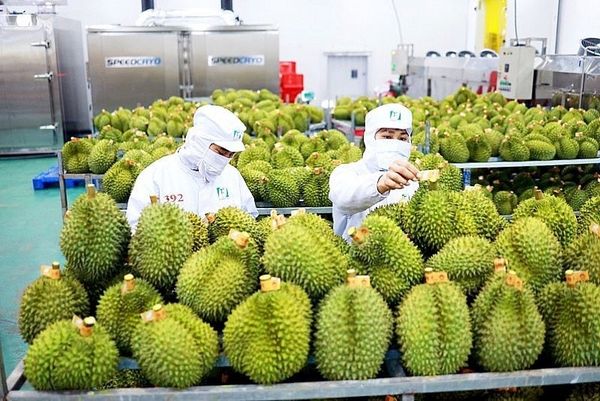
Customs Declaration Procedures for Exporting Agricultural Produce to Japan
At least one day before transporting produce to Japan, businesses should notify the quarantine station at the produce's point of import. The purpose is to reduce the time needed for produce quality testing in both Vietnam and Japan. You should then prepare the following documents so the authorities can inspect them quickly:
- Commercial invoice: The invoice must fully state the seller's and buyer's information, the produce selling price (converted into USD), the Incoterm and the payment method for the produce (T/T, L/C or another method), etc.
- Packing list: The packing list must state the seller's and buyer's information, the packing specifications of the produce (e.g. how many pieces per carton), the weight of each package, the total weight of the shipment, the dimensions of each package, and the number on it must match the commercial invoice number, etc.
- Certificate of origin: The certificate of origin must clearly state information about the produce's input source and output destination, etc.
- Information on the produce production and packing facility: This includes the name and address of the production facility, and the full name, phone number and email of the owner. It also includes the facility's area, the produce name, and information on the number of machines and workers at the facility. If your facility is leased, you must also provide the lease contract.
- Quarantine registration form: In addition to the documents above, you must also submit a produce quarantine registration form using the standard template to the competent authority.
- Other necessary documents as required by the produce importer in Japan.
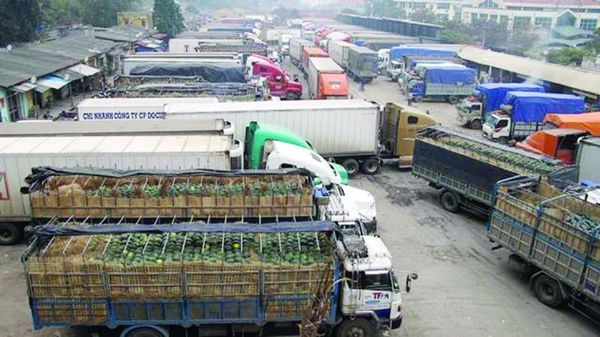
Full-Service Agricultural Export to Japan at Great Prices
Looking for a provider of full-service agricultural export to save time and effort? Then what are you waiting for? Contact EMBASSY FREIGHT SERVICES now! With us, you will get:
- Professional staff to support you from A to Z with customs clearance, customs declaration and other necessary import/export procedures for produce.
- Prompt updates on the produce transport process using modern software.
- In addition, EMBASSY FREIGHT SERVICES offers a highly competitive full-service price list so businesses can save as much as possible.
- We are committed to applying very attractive after-sales policies for customers who cooperate with us over the long term. Call Embassy's hotline 0908105115 now for more detailed advice!
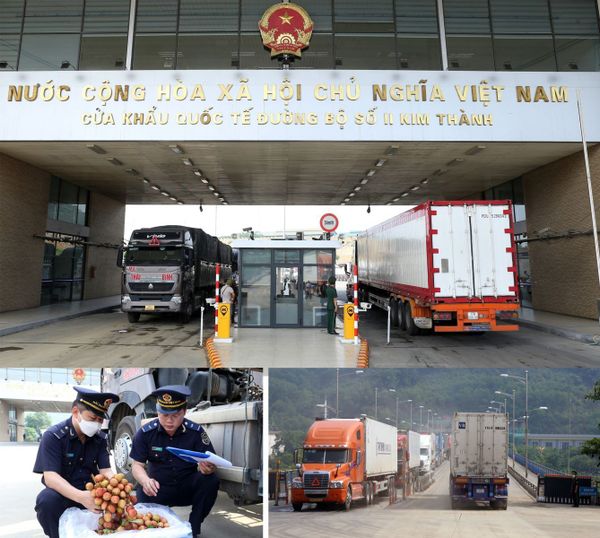
Closing Remarks
By now, manufacturing and trading businesses should have a clear understanding of the latest procedures for exporting agricultural produce to Japan. If you want to export goods to Japan quickly and affordably, contact EMBASSY FREIGHT SERVICES via hotline +84 28 7109 2579 or 0901860743 for number-one professional support!
Contact Information
EMBASSY FREIGHT SERVICES (VIETNAM)
Address: Room 4.25, 4th Floor, 8 Hoang Minh Giam, Ward 9, Phu Nhuan District, Ho Chi Minh City.
Email: info@embassyfreight.com.vn
Full-Service Customs Declaration - Sea Freight Services - Air Freight - Full-Service Import-Export - Domestic Express Delivery - Import-Export Consulting
Contact for Consultation:
- 0901860743 (HCM) - Embassy Freight Services (VN) – Southern Region
- 0937361637 (Hanoi) - Embassy Freight Services (VN) – Northern Region
Need a shipping quote?
Embassy Freight offers sea freight, air freight and full-service customs clearance. Get a free quote or explore our services.