
What Are Dangerous Goods?
Dangerous goods are substances or articles that are explosive, flammable, toxic, infectious or corrosive. They pose a risk to the safety of carriers, the public, property or the environment.
>>>See More: Full-Service Import-Export in HCMC and Hanoi with A-to-Z Support, Cost-Saving
Types of Dangerous Goods? The 9 Classes of Dangerous Goods? Examples of Dangerous Goods?
Dangerous goods are materials or articles with physical and chemical properties that, if not properly controlled, pose a potential hazard to human health and safety and to infrastructure.
Dangerous goods are sorted into classes through a classification system set out by the UN Model Regulations. Each dangerous substance or article is assigned to a class.
There are 9 classes of dangerous goods, and these goods are identified by the nature of the hazard they present:
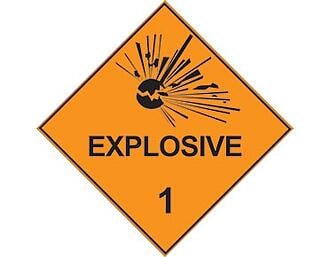
Class 1: Explosives
Class 1 goods are explosives – products capable of detonating or exploding through a chemical reaction. Explosives are very dangerous because their molecules are designed to change state rapidly, usually from a solid into a very hot gas. There are 6 divisions of explosives, relating to how the product behaves when initiated.
- Division 1.1. Substances and articles with a mass explosion hazard.
- Division 1.2. Substances and articles with a projection hazard but not a mass explosion hazard.
- Division 1.3. Substances and articles with a fire hazard and a minor blast hazard or both, but not a mass explosion hazard.
- Division 1.4. Substances and articles that present no significant hazard.
- Division 1.5. Very insensitive substances with a mass explosion hazard.
- Division 1.6. Extremely insensitive articles with no mass explosion hazard.
Examples: fireworks, flares and igniters.
Class 2: Gases
Class 2 includes compressed gases, liquefied gases, refrigerated gases, mixtures of gases with other vapors, and products charged with gas or aerosols. These gases are often flammable and can be toxic or corrosive.
They are also dangerous because they can react chemically with oxygen. They are divided into three subdivisions:
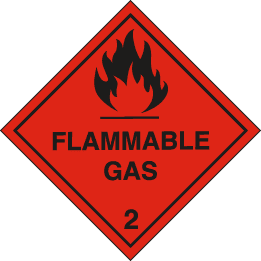
- Division 2.1 Flammable gases
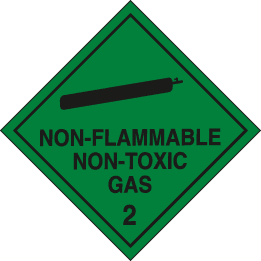
- Division 2.2 Non-flammable, non-toxic gases
- Division 2.3 Toxic gases
Example: fire extinguishers.
Class 3: Flammable Liquids
Flammable liquids are very dangerous to handle and transport because they are highly volatile and easily ignited. Flammable liquids are commonly used as fuel in internal combustion engines for motor vehicles and aircraft.
This means they make up the largest payload among the dangerous goods moved by ground transport.
Many household products also contain flammable liquids, including perfume products and acetone (used in nail polish remover).
>>> See More: Dangerous Goods Transport Service – How to Choose the Right One?
Class 4: Flammable Solids
Class 4 dangerous goods are classified as products that are easily ignited and capable of causing a fire during transport.
Some goods are self-reactive and some are capable of self-heating. There are 3 subdivisions for Class 4 dangerous goods:
- Division 4.1: Flammable solids, self-reactive substances and solid desensitized explosives.
- Division 4.2: Substances liable to spontaneous combustion.
- Division 4.3: Substances that emit flammable gases on contact with water.
Examples: flammable solids include metal powders, sodium batteries and seed cake (oil-bearing seeds).
Class 5: Oxidizing Substances and Organic Peroxides
Class 5 dangerous goods are divided into 'oxidizing substances' and 'organic peroxides'. They are usually extremely reactive because of their high oxygen content.
They react easily with other flammable or combustible materials, meaning a fire can break out and continue in a confined space. These materials are also extremely difficult to extinguish, which makes them even more dangerous.
Division 5.1 Oxidizing substances
Division 5.2 Organic peroxides
Examples: hydrogen peroxide and lead nitrate.
Class 6: Toxic and Infectious Substances
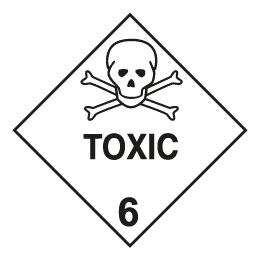
Division 6.1 toxic substances: toxic substances that can be lethal because they are, as the name suggests, poisonous.
They can cause serious injury or harm to human health if they enter the body through ingestion, inhalation or absorption through the skin.
Some toxic substances will kill within minutes; however, some may only cause injury if the dose is not excessive.
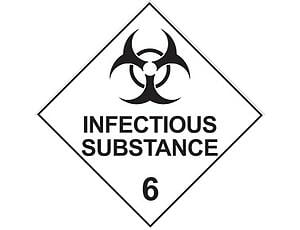
Division 6.2 Infectious substances: goods containing microorganisms that cause infectious disease in humans or animals, also known as pathogens.
Examples: medical waste and acids.
Class 7: Radioactive Materials
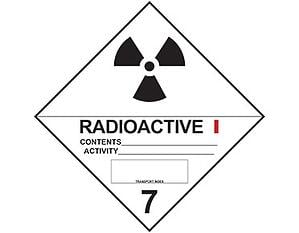
Radioactive materials contain unstable atoms that can change their structure randomly. They contain 'radionuclides', which are atoms with an unstable nucleus.
It is this unstable nucleus that releases radioactive energy. When an atom changes, it emits ionizing radiation, which can cause chemical or biological changes. This type of radiation can be dangerous to the human body.
Example: yellowcake.
Class 8: Corrosive Substances
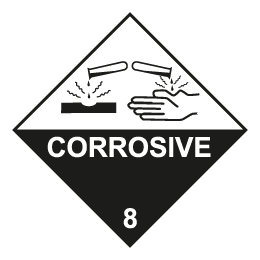
Corrosive substances are highly reactive materials that produce strong chemical effects.
Because of their reactivity, corrosive substances cause chemical reactions that degrade other materials when they come into contact.
If the materials they encounter are living tissue, they can cause severe injury.
Examples: batteries, chlorides.
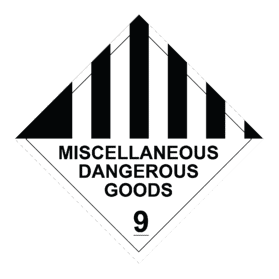
Class 9: Miscellaneous Dangerous Substances and Articles.
This class covers hazardous substances not covered in the other classes.
Examples: dry ice, GMOs, motorcycle engines, seat belt pretensioners, marine pollutants, asbestos, airbag modules and magnetized materials.
Full-service import-export in HCMC and Hanoi will support your business fully from A to Z, from helping prepare shipment-related documents such as packing list, invoice, C/O application (certificate of origin), Phyto (plant quarantine certificate) and import-export permit applications, to fumigation, customs declaration procedures, booking ocean and air freight, packing export goods and even cargo insurance (if needed).
We ensure your shipment always arrives and departs safely and quickly, minimizing costs beyond the quote.
>>> See Details: Full-Service Import-Export in HCMC and Hanoi with A-to-Z Support, Cost-Saving
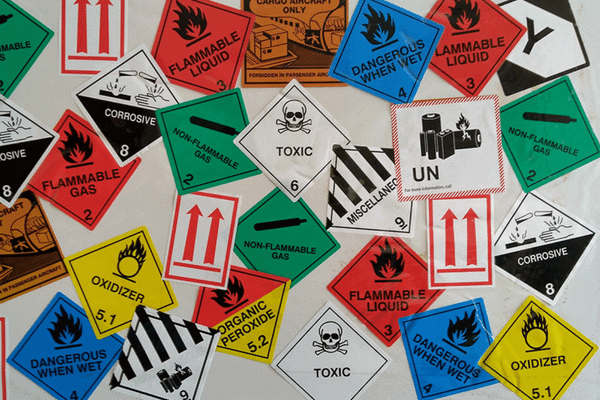
The Different Dangerous Goods Labels
There are 9 different classes of dangerous goods, and some classes also have subdivisions.
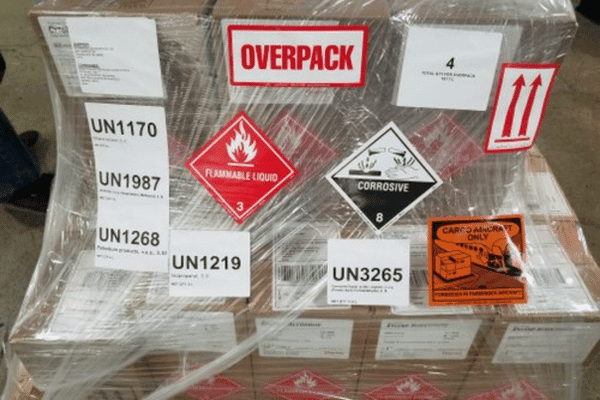
Each type of dangerous goods has a specific dangerous goods label used to warn workers of the associated risks.
These dangerous goods labels are shown below:
Class 1 – Explosives
Class 2.1 – Flammable Gas
Class 2.2 – Non-Flammable, Non-Toxic Gas
Class 2.3 Toxic Gas
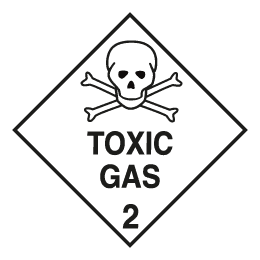
Class 3 – Flammable Liquids
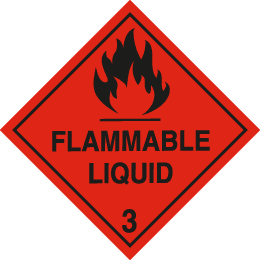
Class 4.1 – Flammable Solids

Class 4.2 – Spontaneously Combustible Substances

Class 4.3 – Dangerous When Wet

Class 5.1 Oxidizing Agent
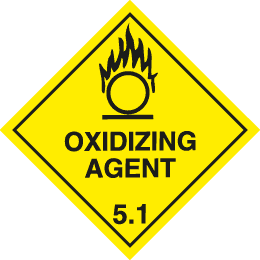
Class 5.2 – Organic Peroxides
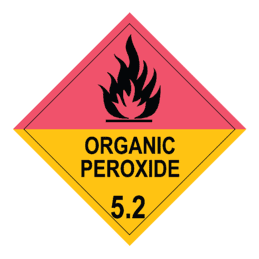
Class 6.1 – Toxic Substances
Class 6.2 Infectious Substances
Class 7 – Radioactive Materials
Class 8 – Corrosive Substances
Class 9 – Miscellaneous Dangerous Goods
How to Pack Dangerous Goods
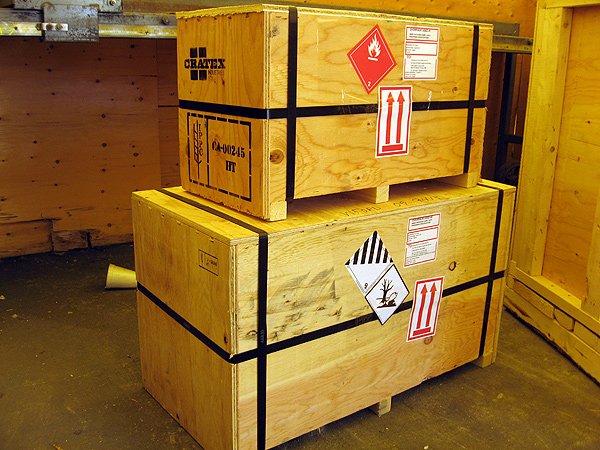
Aviation safety depends on transporting dangerous goods in the correct packaging.
If you choose the wrong packaging, you could seriously injure handling staff, harm the environment or cause serious damage to the aircraft.
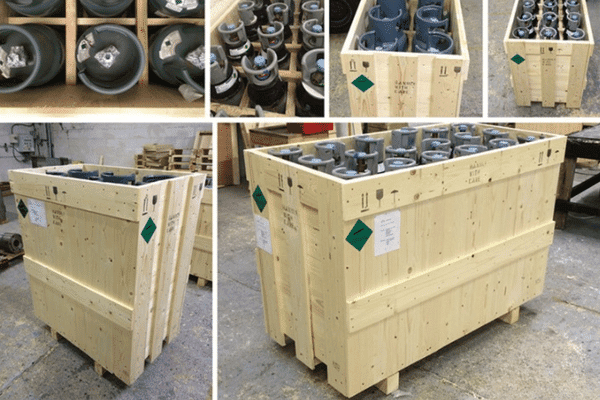
Proper packaging of dangerous goods is based on the most appropriate hazard classification of a product and its physical properties.
For example, you cannot ship corrosive materials in metal packaging because corrosives react violently with metal and will destroy the package.
Some dangerous goods fall into one of 3 packing groups according to the degree of danger to people and equipment:
- Packing Group I: High-danger substances
- Packing Group II: Medium-danger substances
- Packing Group III: Low-danger substances.
How to Load and Unload Dangerous Goods (IMDG 4)
- Identify what needs to be checked during the pre-packing inspection of a CTU.
- Determine how to secure and pack a CTU.
- Match each method to when it should be used to prevent cargo from moving during transport.
- Recognize the best methods to use to achieve a stable load in a CTU.
- Use the classification table to determine the segregation requirements for certain goods.
- Recognize how to load a CTU correctly.
- Identify where the ship's operator can find information on the stowage of dangerous goods in or on the vessel.
- Identify what to look out for when unloading a CTU.
>>> See More: International Ocean Freight Service at Low Rates
Means of Transporting Dangerous Goods
Means of transporting dangerous goods refers to the transport of dangerous goods or hazardous materials. These are substances or articles that pose a danger to health, safety, property or the environment during transport. The transport of hazardous materials is regulated to ensure the safety of people, property and the environment.
There are specific regulations and guidelines for managing the transport of dangerous goods. These regulations set out the rules for the classification, packing, labeling, documentation and handling of hazardous materials during transport. The aim is to prevent accidents, minimize risks and protect individuals and the environment from potential hazards.
Means of transporting dangerous goods may include various modes of transport, such as road, rail, air and sea. Different types of hazardous materials require specific handling procedures and may have restrictions on their transport. For example, flammable liquids, explosives, toxic substances, corrosive materials and radioactive substances are all considered dangerous goods and have specific regulations governing their transport.
IATA Regulations on the Transport of Dangerous Goods
The IATA Dangerous Goods Regulations are a set of rules and regulations proposed and enforced by the International Air Transport Association (IATA). The IATA Dangerous Goods Regulations (DGR) is a detailed document governing the transport of dangerous goods by air. It provides guidance on how to pack, mark, label and handle dangerous goods to ensure safety during transport.
The IATA Dangerous Goods Regulations apply to the aviation and related industries, including airlines, freight forwarders, cargo manufacturers and other related parties. The document sets out the rules on the classification of dangerous goods, packing, incident handling, transport, and dealing with the consequences of incidents involving dangerous goods on flights.
The main aim of the IATA regulations on the transport of dangerous goods is to ensure the safety of passengers, crew and the public during the transport of dangerous goods. Complying with these regulations helps reduce the risk of explosions, fires, environmental pollution and other accidents involving dangerous goods on aircraft.
The specific IATA regulations and guidelines on the transport of dangerous goods can be found in the IATA Dangerous Goods Regulations (DGR) document, and it is updated periodically to reflect the latest regulations and advances in aviation technology and safety.
Guidelines for Transporting Dangerous Goods by Air
Guidelines for transporting dangerous goods by air are the process of regulating and instructing the transport of dangerous goods by air safely and in compliance with the regulations of ICAO (International Civil Aviation Organization) and IATA (International Air Transport Association). For the transport of dangerous goods by air, you must comply with the regulations on packing, marking, labeling and accurate declaration procedures.
The regulations on transporting dangerous goods by air include information on the type of dangerous goods, how to pack and mark them, suitable means of transport, the required documents, declaration procedures and related paperwork, as well as safety measures during transport and emergency handling.
The basic steps in the process of transporting dangerous goods by air are: identifying the type of dangerous goods, packing and marking the goods according to regulations, preparing the required documents, declaring the dangerous goods to the airline, scheduling transport, carrying out safety checks before the flight, and complying with the regulations on handling dangerous goods after transport.
Dangerous Goods Transport Service by Air & Sea
Embassy Freight Services (VN) provides a full-service dangerous goods transport service by air and sea with A-to-Z support for customers.
With over 20 years of experience in transporting dangerous goods, plus the advantage of over 50 offices and 30 agents worldwide, we ensure a comprehensive, high-quality dangerous goods transport service at reasonable rates, to maximize logistics cost savings for every business.
Whether it is a small shipment or a large-volume project shipment, our experienced team supervises and smoothly handles any issues that may arise.
We ensure the customs clearance and transport process delivers goods to customers as safely and quickly as possible.
If you are interested in the dangerous goods transport service of Embassy Freight Services (VN), contact hotline 0901860743 right away for the fastest support.
Benefits of Using Embassy Freight Services (VN)'s Air & Sea Dangerous Goods Transport Service
Transporting dangerous goods is one of those tasks where absolute safety must be guaranteed. That is why choosing a reputable and professional carrier is very important.
Embassy Freight Services (VN) is one of the most reputable providers of air and sea dangerous goods transport services today. Here are the benefits customers can enjoy when using Embassy Freight Services (VN)'s service:
Transporting Dangerous Goods by Air
1. Fast transport speed
Transporting dangerous goods by air reduces transit time compared with using sea freight. With Embassy Freight Services (VN)'s dangerous goods transport service, customers can rest assured of fast, on-time transport.
Absolute safety guaranteed
With many years of experience in transporting dangerous goods, Embassy Freight Services (VN) is committed to guaranteeing absolute safety for customers' goods. Procedures, standards and regulations are strictly followed to ensure the safety of goods during transport.
A professional team
The team at Embassy Freight Services (VN) are all experts in transporting dangerous goods. All are equipped with deep professional knowledge and practical work experience. Customers can therefore rest assured of the quality of service provided.
Transporting Dangerous Goods by Sea
Reasonable pricing
Transporting dangerous goods by sea is usually cheaper than by air. This helps customers save on shipping costs. Embassy Freight Services offers customers the most reasonable and competitive prices on the market.
Meeting a wide range of customer requirements
Sea transport allows the transport of dangerous goods of larger sizes that may not be transportable by air. Embassy Freight Services is able to meet a wide range of customer requirements with a professional team and equipment.
Safety during transport
Embassy Freight Services (VN) ensures the safety of customers' goods during sea transport. Customers are provided with the necessary information and technical advice to ensure the safety of their goods.
Those are the benefits customers can enjoy when using the dangerous goods transport service of Embassy Freight Services (VN). With experience and expertise in transporting dangerous goods, we bring customers complete satisfaction and trust.
Contact Information
EMBASSY FREIGHT SERVICES (VIETNAM)
Address: Room 4.25, 4th Floor, No. 8 Hoang Minh Giam, Ward 9, Phu Nhuan District, Ho Chi Minh City.
Email: info@embassyfreight.com.vn
Contact for Consultation:
- 0901860743 (HCM) – Embassy Freight Services (VN) Southern Region
- 0937361637 (Hanoi)- Embassy Freight Services (VN) Northern Region
See Also:
- C/O Application – Certificate of Origin (C/O) Service
- Công Ty Cung Cấp Dịch Vụ Vận Chuyển Hàng Đi Campuchia Trọn Gói Hỗ Trợ Từ A Đến Z
- Very Affordable Full-Service Used Machinery & Equipment Import
- Everything from A to Z About Air Compressor Import Procedures
- The Most Accurate and Efficient Electrical Cable Import Procedures
- Legal Regulations on the Import of Plant Protection Products
- Full-Service Import-Export in HCMC & Hanoi with A-to-Z Support, Cost-Saving
- Full-Service Australian Wine Import to Vietnam
- Official Agricultural Exports to China by Sea – A-to-Z Export Support
- Detailed Guide to the Most Accurate Forklift Import Procedures
- Guide to Air Cooler Import Procedures
- Full-Service Customs Declaration, No Costs Beyond the Quote
- Alcohol Import Procedures – Full-Service Alcohol Shipping & Import
| ✅ Customs Declaration Service: | ⭐ Fast Clearance, Good Prices, No Costs Beyond the Quote |
| ✅ Air & Sea Freight: | ⭐ Good, Competitive Rates |
| ✅ Import-Export Service: | ⭐ Full-Service, Good Prices |
| ✅ Experience: | ⭐ Over 22 Years of Experience |
| ✅ Additional Services: | ⭕ C/O Issuance, Import Permits, Animal & Plant Quarantine, Crating, On-the-Spot Import-Export & Related Documentation |
| ✅ Agents, Offices: | ⭕ Over 50 Offices and Agents in 30 Countries Worldwide |
Need a shipping quote or import-export procedures?
Embassy Freight provides full-service ocean freight, air freight, customs clearance and outsourced import-export department rental. Get a free quote or explore our services.